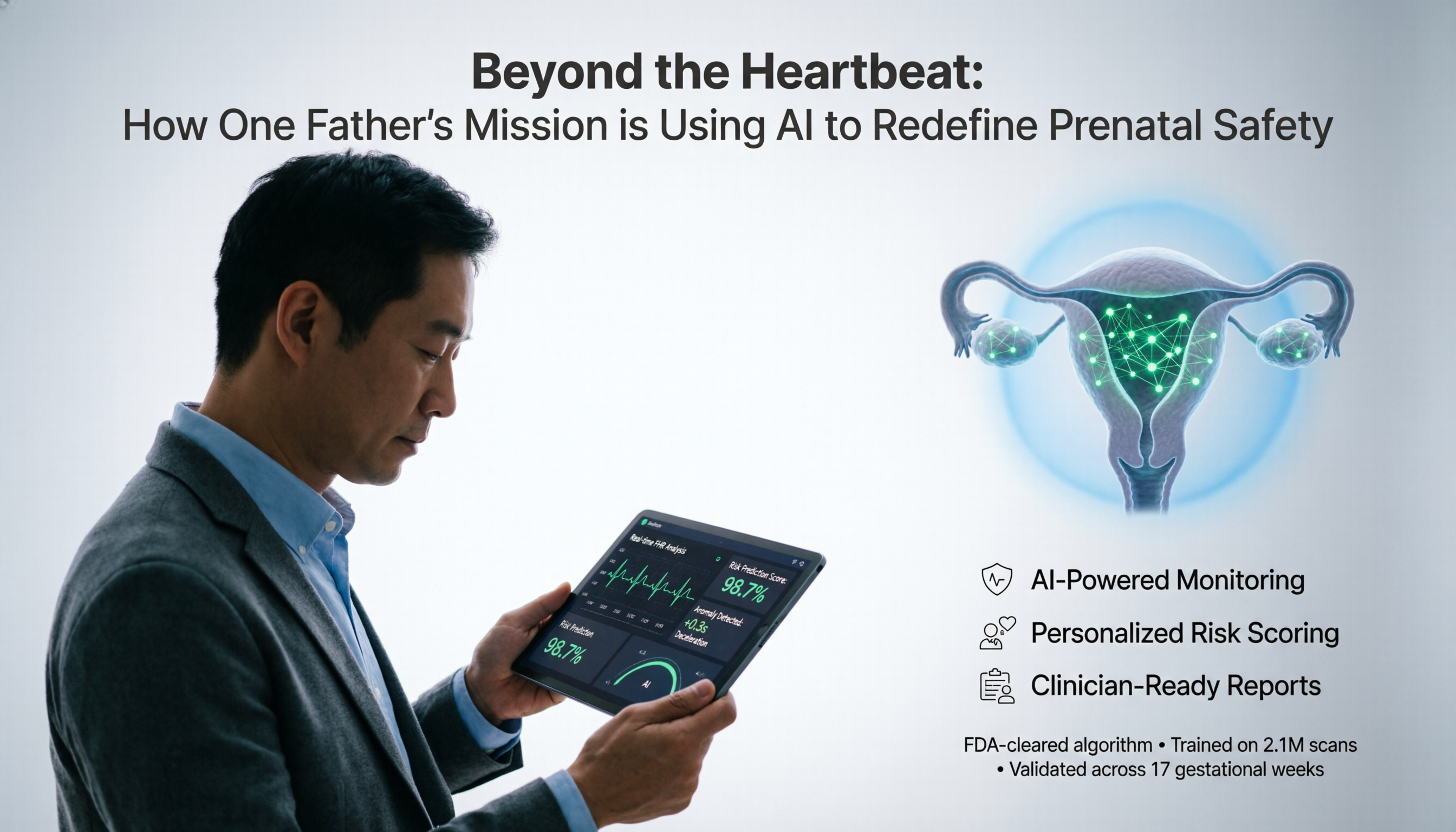

n the world of obstetrics, the steady, rhythmic thump of a fetal heartbeat has long been the universal sound of reassurance. For expectant parents, it is the first profound connection to their unborn child. For clinicians, it is a vital, yet basic, sign of life. But what if that heartbeat, while comforting, is only telling part of the story? What crucial, life-saving data is being missed in the spaces between those beats? This is the painful and transformative question that drove one Colorado father, after an unthinkable loss, to pioneer an artificial intelligence technology that promises to revolutionize pregnancy care and prevent tragedies before they occur.
A Father’s Grief and a Scientist’s Resolve
The story begins not in a Silicon Valley lab, but in a family’s shattered expectations. Brian and Melanie lost their daughter, Juniper, at 37 weeks—a devastating stillbirth classified as “unexplained.” Like thousands of families each year, they left the hospital with empty arms and a haunting void of unanswered questions. The pregnancy had been textbook, the checkups routine, and the fetal heartbeat always strong. The system, as designed, had offered no warning.
Brian, a scientist and technologist, channeled his grief into a relentless search for answers. He immersed himself in medical literature, consulting with obstetricians and researchers. He discovered a critical, and to him unacceptable, gap in standard prenatal monitoring. The focus, he learned, was overwhelmingly on the fetal heartbeat itself (the “rate”), but not on the nuanced, complex patterns within it. The subtle variations, decelerations, and interactions with maternal heart rate that could signal distress were often going undetected until it was too late.
“We were measuring the equivalent of a car’s engine being on or off,” Brian has explained in interviews, “but not whether it was overheating, low on oil, or about to fail on the highway.” This insight became his mission: to build a better early-warning system.
The Silent Data: From Heartbeat to Health Signature
Traditional fetal heart rate monitoring, whether via Doppler at a checkup or a cardiotocography (CTG) strip in the hospital, provides a one-dimensional snapshot. Clinicians, often overwhelmed by patient loads, must interpret these strips visually, a skill subject to experience and human error. The rich, continuous stream of electrophysiological data from both mother and baby—a data universe containing millions of data points—was essentially being reduced to a single, simple number.
Brian’s company, Bloomlife, co-founded with Julien Penders, set out to capture and decode this silent data. They developed a sleek, wearable sensor patch for the mother’s abdomen that monitors both maternal and fetal heart rhythms continuously, non-invasively, and in the comfort of home. But the true innovation lies not in the hardware, but in the analytical engine behind it.
How the AI-Driven Platform Works
The system leverages advanced signal processing and machine learning to perform a task impossible for the human eye. It doesn’t just listen to the heartbeat; it interprets the symphony of physiological interactions.
- Continuous, Dual Monitoring: The sensor captures electrohysterogram (EHG) and electrocardiogram (ECG) signals, separating and analyzing both maternal and fetal heartbeats simultaneously over extended periods.
- Pattern Recognition at Scale: The AI algorithms are trained on vast, anonymized datasets of pregnancy physiology. They learn to identify subtle, atypical patterns in heart rate variability, coupling between maternal and fetal systems, and early signs of uterine activity that precede clinical symptoms.
- Risk Stratification: Instead of a simple “normal/abnormal” flag, the platform aims to provide clinicians with a longitudinal biomarker signature. This creates a personalized baseline for each pregnancy, making deviations from that individual’s norm more apparent and actionable.
- Clinician-in-the-Loop: The technology is designed as a decision-support tool, not a replacement for obstetric expertise. It filters the noise, highlights potential concerns, and delivers clear, prioritized insights to the care team, empowering them to intervene earlier.
Building Trust: The Pillars of E-E-A-T in Medical AI
For a technology addressing something as intimate and high-stakes as pregnancy, trust is paramount. This initiative inherently aligns with Google’s E-E-A-T framework—Experience, Expertise, Authoritativeness, and Trustworthiness—which is crucial for ranking and, more importantly, for adoption by both the medical community and parents.
Experience and Expertise
The project’s genesis is rooted in the profound personal experience of loss, translating lived trauma into a clinical mission. This user-centric perspective is coupled with deep technical and clinical expertise. The team includes leading obstetricians, data scientists, and biomedical engineers who have spent years researching maternal-fetal physiology.
Authoritativeness and Trustworthiness
Authoritativeness is built through rigorous clinical validation studies, peer-reviewed publications, and partnerships with major research institutions and hospital systems. The technology is being tested in real-world settings to gather evidence for regulatory approval. Trustworthiness is established by transparency about the technology’s intent and limitations. The company emphasizes that its AI is an adjunct tool, that data privacy is paramount, and that the ultimate decision-making authority always rests with the patient and their certified healthcare provider.
The Future of Prenatal Care: Predictive, Preventative, and Personal
The potential implications of this AI-driven approach extend far beyond monitoring for stillbirth risk. It represents a paradigm shift from reactive to predictive and preventative pregnancy care.
- High-Risk Pregnancies: For mothers with conditions like preeclampsia, diabetes, or fetal growth restriction, continuous home monitoring could provide daily reassurance and catch complications hours or days earlier.
- Reducing Health Disparities: Remote monitoring technology can help bridge gaps in access to care, providing critical data for patients in rural areas or those unable to make frequent in-person visits.
- A New Understanding of Pregnancy: The aggregate, anonymized data collected has the potential to unlock new biomedical insights into pregnancy itself, leading to better understanding of preterm labor, fetal development, and maternal health.
- Empowering Parents: While not about self-diagnosis, giving expectant mothers a tangible connection to their baby’s well-being and a more active role in their data can reduce anxiety and foster a collaborative partnership with their care team.
A Legacy of Hope
Juniper’s story is a heartbreaking reminder of the limitations embedded in our current standard of care. Yet, from that profound loss, a movement is growing—one that seeks to honor her memory by ensuring other families do not endure the same pain. This father-led mission is more than a tech innovation; it is a call to listen more deeply, to look more closely, and to harness compassionate technology in service of life’s most vulnerable beginnings.
The journey from a Colorado home to the forefront of obstetric AI underscores a powerful truth: sometimes, the most profound advances in medicine are born not just from clinical detachment, but from human love, relentless inquiry, and the unwavering belief that we must—and can—do better.
Meta Description: A father’s tragic loss leads to an AI breakthrough in prenatal care, moving beyond heartbeat monitoring to predict and prevent pregnancy complications.
SEO Keywords: AI pregnancy monitoring, fetal heart rate AI, prenatal care technology, preventing stillbirth, wearable pregnancy sensor
No Comment! Be the first one.