
Imagine a city that was so amazing that ancient Greek historians wrote about it. This city was full of temples and harbors with ships from around the Mediterranean. Now imagine that this city just disappeared, swallowed up by the earth and sea and forgotten for over a thousand years. That is the story of Thonis-Heracleion.
For a time the Nile kept this secret hidden under layers of mud and dark water. Then in 2000 a team of archaeologists did something that many people thought was impossible. They found the city.. The really cool thing about this discovery is that they did not find it the old way. They did not use shovels. Guess where it might be. Instead they used tools that sound like they are from a science fiction movie. They used satellite maps, waves that can make pictures of the sea floor and tiny particles from space that are always falling to the earth.
This is how new technology helped us learn more about history.. It is a really exciting story.
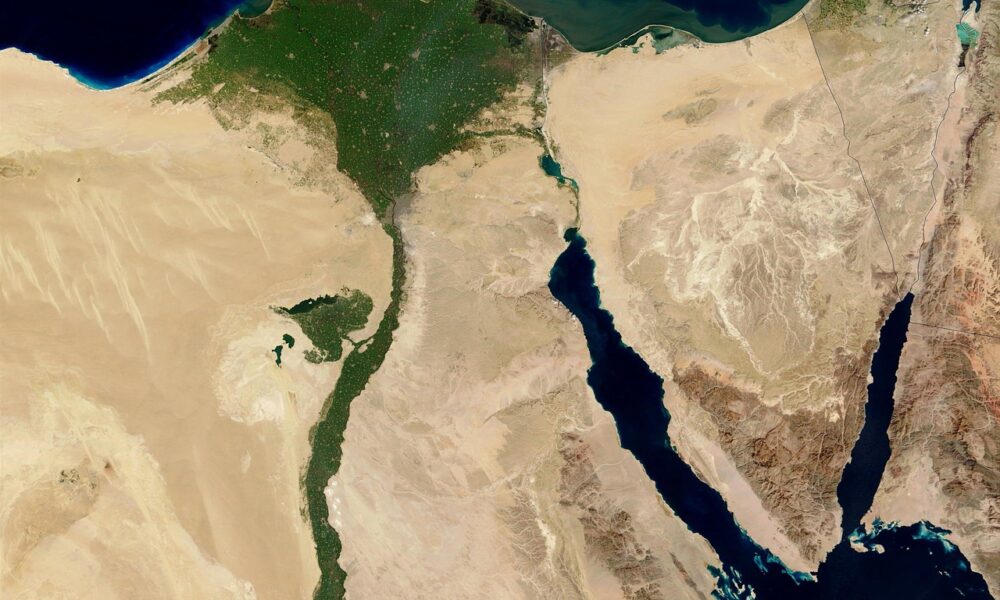
The city of Thonis-Heracleion was not a small village. It was an important place. The city was at the mouth of the Nile. It was the main way that Egypt connected with the Greek world. Ships from Athens and other islands in the Aegean Sea came to Thonis-Heracleion to trade goods and worship the gods. The city had canals and big temples dedicated to gods and a harbor that was always busy.
Then something big happened around the century. The ground under the city just gave way. Everything fell into the sea. The city did not sink slowly it just fell. Over a scary moments Thonis-Heracleion disappeared under the waves and was buried under the Niles mud.
For 1,200 years the river kept its secret.
Finding a city is like finding a needle in a huge haystack. When Franck Goddio, an underwater archaeologist set out to find Thonis-Heracleion he was not just determined. He had really cool technology to help him.
The first step was to look at the area from space. Satellite pictures can show us things about the land that we cannot see from the ground. Special sensors on the satellites can detect changes in how the water reflects light and how the ground is shaped. It is like looking for bumps under a carpet. The carpet is several meters of water and the bumps are the shapes of old temples.
This gave the researchers a place to start looking. They did not have to search the area they could just look in the places that the satellite pictures showed were interesting.
The next step was to listen to the sea floor. The researchers used a device that’s like a big ear for the ocean. It sends out waves and listens for the echoes. This showed them the shapes of temples and statues that were still sitting on the sea floor. It even showed them the shapes of ships that had sunk.
The sound waves only showed them what was on the surface of the sea floor. To see what was underneath they used a device that sends out low-frequency sound waves. This is like an ultrasound for the ocean floor. It showed them the layers of sediment and what was buried underneath.
To make a map of the area they used a system that sends out sound waves and measures the depth of the water. This created a detailed map of the city with its canals and buildings.
The third step was to use particles from space. These particles are called muons. They are created when cosmic rays from space hit the earths atmosphere. They can pass through objects but they are absorbed by denser materials. So if you place a detector in a pyramid or near a buried tomb you can count how many muons pass through and make a map of what’s inside.
This technology is already being used to study monuments. Researchers are using it to look for rooms in pyramids and to see inside structures that have been sealed for thousands of years.
Now that the city has been found the next step is to understand it. The researchers are using computers to make models of the city and its buildings. They are taking thousands of pictures of the artifacts. Stitching them together to make very accurate models. This will help them to preserve the city analyze it and even reconstruct it.
This discovery is not about finding an old city. It is about how we can use technology to learn more about the past. We can use satellites, sound waves and particles from space to find lost cities and understand them. This is a way of doing archaeology and it is very exciting.
The story of Thonis-Heracleion is not about the past. It is about how we can use technology to learn more about the world and its history. There are other lost cities out there and, with this new technology we may be able to find them. We can use muons, artificial intelligence and remote sensing to discover things and understand them better.
The city that was lost for 1,200 years is now being understood. Its canals are being mapped its buildings are being. Its story is being pieced together. This is a way of doing archaeology and it is just the beginning.
No Comment! Be the first one.